 blog
Best Small Batch Spirits for Cocktails: 2026 Guide
Table of Contents
- Why Small Batch Spirits Belong in Your Cocktail Rotation
- The Best Small-Batch Bourbon for Cocktails
- Small-Batch Whiskey for an Old Fashioned
- Beyond Whiskey: Tequila, Mezcal, Gin, and Vodka
- Cocktails Made with Moonshine: More Versatile Than You Think
- The Best Spirits for a Home Bar, Ranked by Cocktail Versatility
- Cocktail-by-Cocktail Bottle Matching
- Old Fashioned, small-batch bourbon or rye, 90-100 proof
- Manhattan, small-batch rye for spice, bourbon for roundness
- Margarita, 100% agave small-batch tequila, blanco
- Smoky Margarita, small-batch mezcal, espadín
- Martini, juniper-forward small-batch gin, 44-47% ABV
- Negroni, small-batch gin, equal parts
- Mule, small-batch vodka or unaged moonshine
- Tiki drinks, aged rum or flavored moonshine
- Practical Buying, Storage, and Bottle Longevity
- Frequently Asked Questions
Last Updated: October 7, 2026
Why Small Batch Spirits Belong in Your Cocktail Rotation
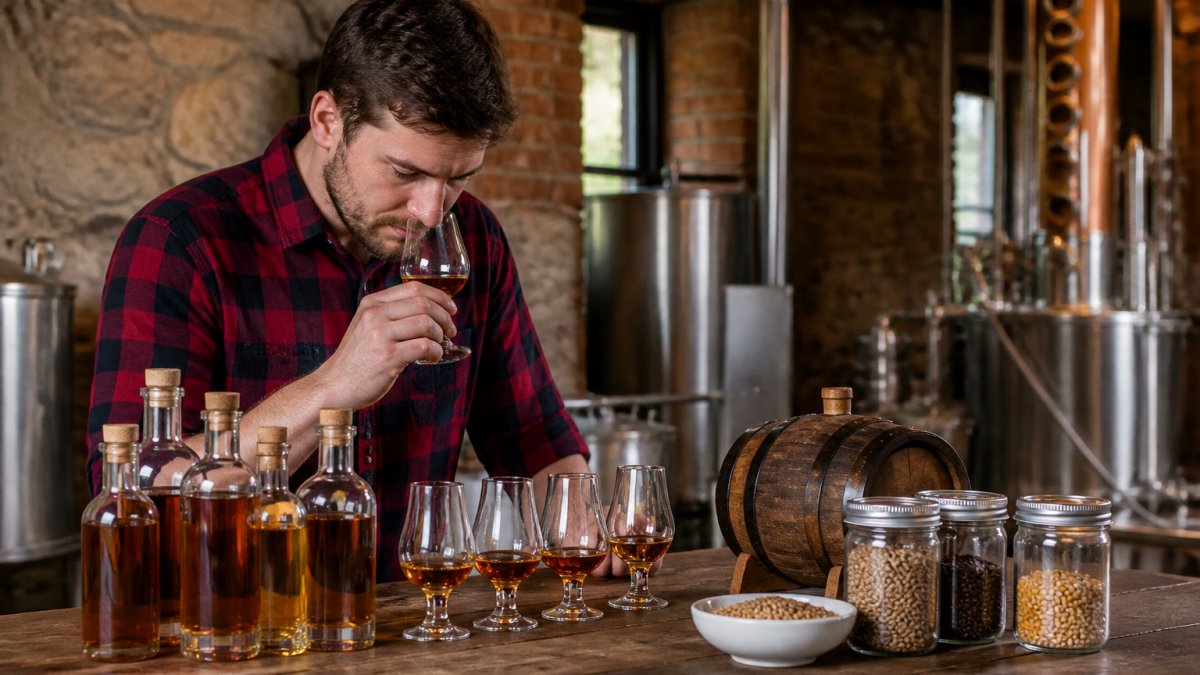
Walk down any liquor store aisle and you will see the same mass-produced labels repeated across every shelf. At Lighthouse Spirits, we produce spirits in small runs rather than continuous industrial batches.
Small batch spirits are produced in limited, carefully controlled runs, typically using traditional methods and closer attention to each batch than industrial production allows.
The 8 categories below range from bourbon to moonshine, and each earns its place by how well it performs in an actual cocktail.
What Small Batch Actually Means on a Label
The term "small batch" has no single legal definition in the United States, which is why it gets abused.
What separates a genuine small batch spirit from a marketing claim comes down to three things: batch size, production transparency, and whether the distillery controls its own distillation. At Lighthouse Spirits, we keep our runs deliberately limited.
How to Read a Bottle Before You Buy
Reading a bottle takes about 30 seconds once you know what to look for.
- Proof and ABV: Higher proof gives cocktails more backbone but needs dilution. Bottles around 100 proof are the sweet spot for stirred drinks.
- Mash bill: For whiskey, this reveals the grain recipe. High-rye mash bills bring spice; high-corn brings sweetness.
- Age statement: If a number appears, the youngest spirit in the bottle is at least that old. No number means no guarantee.
A common mistake is assuming a higher price means better quality. A modestly priced bottle from a transparent small producer often outperforms a premium bottle from a brand that buys bulk spirit and rebrands it.
The Best Small-Batch Bourbon for Cocktails
Bourbon is the workhorse of the home bar, and small-batch versions bring depth standard bottlings rarely match. The best small-batch bourbon for cocktails balances sweetness with enough spice to hold its own against mixers and bitters.
Look for a bourbon in the 90 to 100 proof range with a mash bill that leans on corn but leaves room for rye.
Small-Batch Whiskey for an Old Fashioned
An Old Fashioned lives or dies by its whiskey, because there are only three other ingredients to hide behind.
Rye whiskey shines here. Its spice and drier finish cut through the sugar cube's sweetness, producing structure rather than syrup.
If you prefer bourbon, choose one with a higher rye content in the mash bill, you get bourbon's roundness with a whisper of that rye edge.
Beyond Whiskey: Tequila, Mezcal, Gin, and Vodka
Whiskey gets most of the attention, but the wider small-batch world is where cocktail creativity opens up.
Tequila made from 100% agave, in small runs, tastes of cooked agave, citrus, and earth.
Mezcal adds smoke.
Gin is where botanicals matter most. A juniper-forward small-batch bottle makes a clean, classic Martini; a more floral one suits a Gin and Tonic.
Cocktails Made with Moonshine: More Versatile Than You Think
Moonshine has a reputation problem. Many drinkers assume it is only for shots, which undersells what a well-made version can do.
Unaged moonshine brings a clean, slightly sweet corn character that mixes beautifully in a Mule or Highball with ginger beer and lime.
Treat moonshine like any other base spirit: balance it with acid, sugar, and a complementary mixer, and it performs.
The Best Spirits for a Home Bar, Ranked by Cocktail Versatility
If you are building a home bar from scratch, versatility matters more than having a bottle for every occasion.
| Rank | Spirit | Best For | Why It Earns Its Spot |
|---|---|---|---|
| 1 | Small-batch bourbon | Old Fashioned, Boulevardier | Sweet-spice balance suits stirred drinks |
| 2 | Small-batch rye | Manhattan, Sazerac | Spice cuts through sugar and bitters |
| 3 | Small-batch gin | Martini, Gin and Tonic | Botanical range covers classic and modern |
| 4 | 100% agave tequila | Margarita, Paloma | Bright agave flavor, no additives |
| 5 | Small-batch mezcal | Smoky Margarita | Adds smoke and depth |
| 6 | Small-batch vodka | Mule, Martini | Neutral base, clean finish |
| 7 | Moonshine | Highball, tiki drinks | Flexible, mixable, approachable |
Start with the top three and add the rest as your cocktail repertoire grows. A focused bar beats a crowded one every time.
Cocktail-by-Cocktail Bottle Matching
Most roundups stop at "use bourbon for an Old Fashioned." That is a category, not a recommendation.
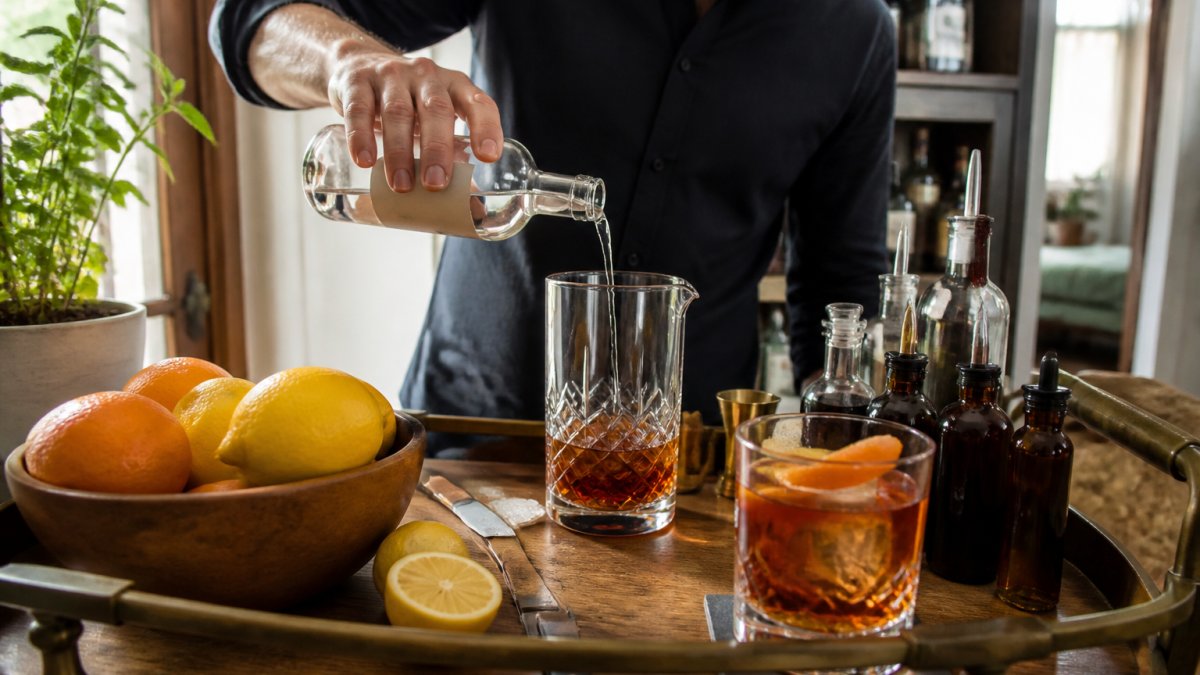
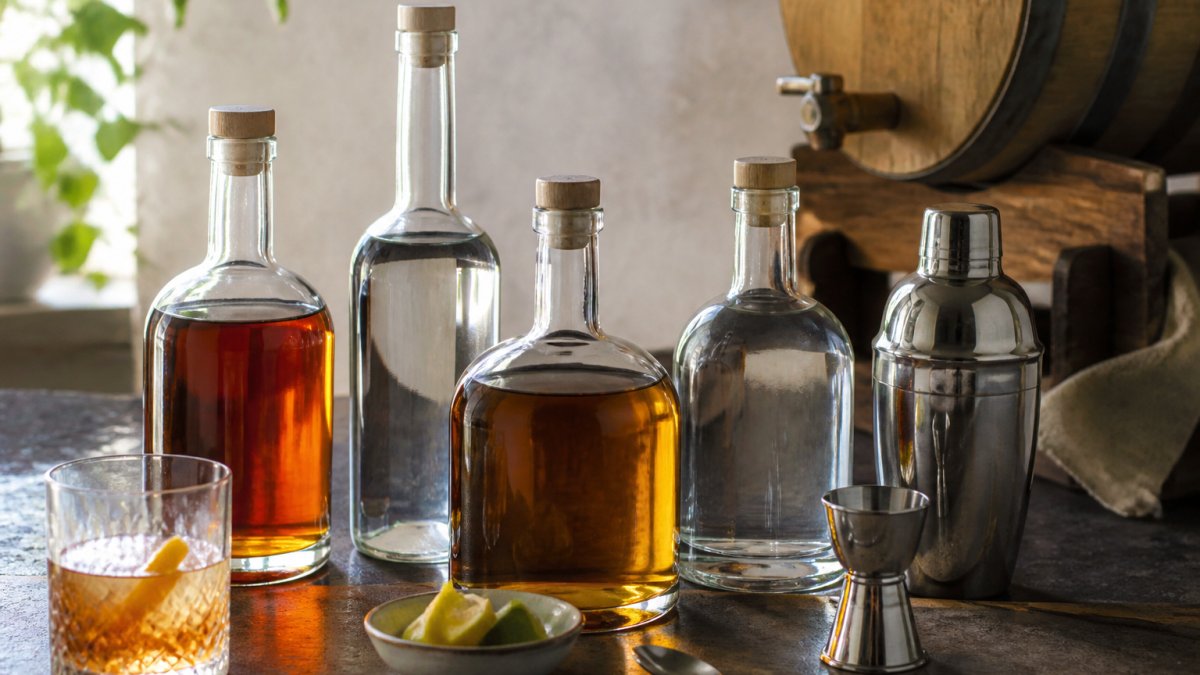
Old Fashioned, small-batch bourbon or rye, 90-100 proof
Why it works: With only spirit, sugar, bitters, and water, the whiskey is roughly 90% of the drink.
Build: 2 oz spirit, 1 barspoon rich simple syrup, 2-3 dashes aromatic bitters, expressed orange peel.
What to avoid: Cask-strength bottles above 120 proof will overwhelm the bitters unless you dilute deliberately.
Manhattan, small-batch rye for spice, bourbon for roundness
Why it works: Sweet vermouth already supplies sugar and herbal notes, so the whiskey needs to cut through rather than add.
Build: 2 oz spirit, 1 oz sweet vermouth, 2 dashes Angostura. Stir, strain into a coupe, brandied cherry.
Ratio note: If your rye is 100 proof or higher, push the vermouth to 1 oz.
Margarita, 100% agave small-batch tequila, blanco
Why it works: Blanco tequila is unaged, so cooked-agave and citrus notes hit the front of the palate before the lime and orange liqueur arrive.
Build: 2 oz blanco, 1 oz fresh lime, 3/4 oz orange liqueur, optional 1/4 oz agave syrup.
Label check: "100% de agave" on the front means no cane spirit was blended in.
Smoky Margarita, small-batch mezcal, espadín
Why it works: Espadín mezcal is the most widely planted agave variety and produces the mildest, most approachable smoke.
Build: Use the Margarita spec above but split the base, 1 oz blanco tequila, 1 oz espadín mezcal. This is the standard "split base" move and it keeps the agave brightness while adding smoke.
Martini, juniper-forward small-batch gin, 44-47% ABV
Why it works: A Martini is gin, vermouth, and dilution. If the gin is floral or citrus-heavy, the botanicals fight the vermouth.
Build: 2 1/2 oz gin, 1/2 oz dry vermouth, orange or lemon twist.
Strength note: Navy-strength gin (57% ABV and up) makes a Martini that tastes like a different cocktail.
Negroni, small-batch gin, equal parts
Why it works: Equal parts gin, sweet vermouth, and Campari is a 1:1:1 drink, so the gin must hold its own against two assertive ingredients. A botanical-heavy gin with a piney or root-forward profile (juniper, angelica, orris) reads through the Campari's bitterness.
Build: 1 oz gin, 1 oz sweet vermouth, 1 oz Campari. Stir over ice, strain over one large cube, orange peel.
Mule, small-batch vodka or unaged moonshine
Why it works: Ginger beer is the dominant flavor, so the spirit is there for backbone and mouthfeel, not aroma. A clean, neutral small-batch vodka or unaged corn moonshine both work; a flavored moonshine changes the drink entirely.
Build: 2 oz spirit, 1/2 oz fresh lime, 4 oz ginger beer over crushed ice. Copper mug is traditional but not required.
Tiki drinks, aged rum or flavored moonshine
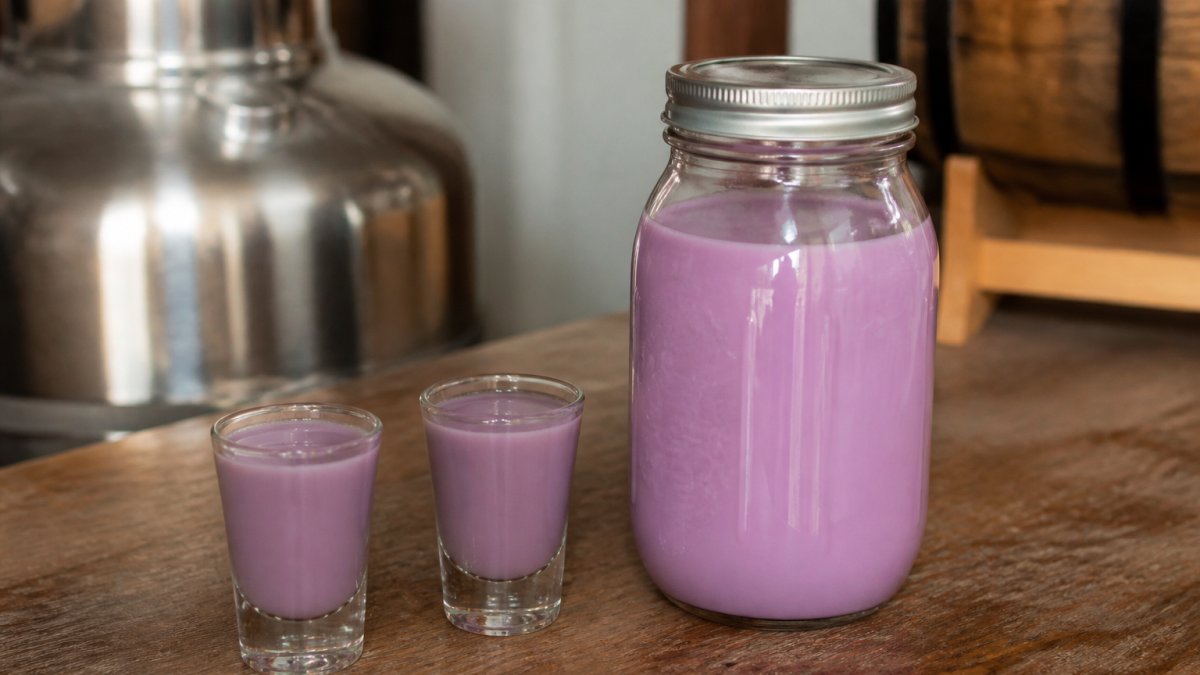
Why it works: Tiki specs stack multiple rums for complexity, and a flavored moonshine (ube, apple pie, cinnamon) can substitute for one of the sweetened or spiced components. Treat it as a modifier, not the base, usually 1/2 oz to 1 oz in a drink that already has 2 oz of rum.
Practical Buying, Storage, and Bottle Longevity
Buying and storing small-batch spirits well protects both your money and your flavor, and decides whether you end up with a bottle you like.
What "small batch" does and does not tell you at the shelf
There is no single federal production threshold a bottle must meet to print "small batch" on the label. The Alcohol and Tobacco Tax and Trade Bureau (TTB) regulates labeling broadly, but "small batch" is not a defined class the way "straight bourbon" or "100% agave" is. It is a marketing claim, not a guarantee.
What you can verify on the label:
- A named distillery and location. "Distilled by" is stronger than "bottled by" or "produced by." The latter two often mean the liquid was sourced.
- A batch or bottle number. A hand-written or printed batch code signals a real production run.
- A mash bill or ingredient list. Whiskey labels are not required to disclose mash bill, but many small producers do voluntarily.
Price bands to expect
Small-batch does not automatically mean expensive, but you are paying for smaller runs:
- Budget tier (roughly $20-$35): entry-level small-batch bourbon, blanco tequila, and unaged moonshine. This is where most home bars should start.
- Mid tier (roughly $35-$60): higher-proof bourbons and ryes, small-batch gin, reposado tequila, and espadín mezcal. This is the sweet spot for cocktail use.
- Premium tier ($60 and up): single-barrel picks, aged expressions, and limited runs. Worth it for sipping, rarely necessary for mixing.
Bottle sizes and what they mean for a home bar
- 375 mL (half bottle): good for trying a new category without committing to a full bottle. Roughly 8-9 two-ounce pours.
- 750 mL (standard): the default. Roughly 16-17 two-ounce pours, or about 12-14 cocktails once you account for other ingredients.
- 1 L and 1.75 L: better value per ounce, but only worth it for a bottle you already know you like. Small-batch producers rarely offer these sizes.
Availability: where small-batch bottles actually come from
Small-batch spirits move through three channels:
- Direct from the distillery. Often the freshest stock and clearest story. Many producers offer local pickup or ship within their state.
- Independent liquor stores. More likely to carry local and regional small-batch bottles than national chains, and staff will usually special-order.
- Online retailers and marketplaces. Shipping rules vary by state, and some prohibit direct-to-consumer spirits shipping entirely. Verify before you order.
Before buying a full bottle, look for a bar pour at a local tasting.
Storage and longevity
- Keep bottles upright. High-proof spirits can degrade natural corks over years if stored on their side.
- Keep them out of sunlight. Ultraviolet light breaks down flavor compounds, and the damage is irreversible.
- Keep them cool and stable. A closet or lower cabinet beats a countertop near the stove.
A quick buying checklist
Before you commit to a bottle:
- Is the distillery named on the label?
- Is there a batch or bottle number?
- Is the proof in the range you want for the cocktails you plan to make (90-100 for stirred whiskey drinks, 40-47% ABV for gin and vodka, 100% agave for tequila and mezcal)?
- Is the price in a tier you are comfortable with for a bottle you have not tried?
- Can you buy a smaller size or taste it first?
If the answer to the first two is no, you are probably paying a small-batch premium for a sourced product. That is not automatically bad, some sourced bottles are excellent, but you should know what you are buying.
Frequently Asked Questions
What is the best spirit for cocktails?
The best spirit depends on the drink. Small-batch bourbon and rye whiskey anchor stirred classics like the Old Fashioned and Manhattan. Gin works for shaken drinks like the Martini and Negroni. Tequila and mezcal suit Margaritas and Palomas. Vodka is the most neutral base, letting mixers and liqueurs lead. For a home bar, start with one whiskey, one gin, and one agave spirit. That trio covers most classic cocktail recipes without overloading your shelf.
Does small-batch whiskey make a difference in cocktails?
Yes, and the difference shows up in flavor concentration. Small-batch distillers often use specific mash bills, yeast strains, and barrel aging schedules that create deeper tasting notes. In a spirit-forward drink like an Old Fashioned, those notes carry through because there are only three ingredients. Mass-produced whiskey can taste flatter by comparison. The gap narrows in drinks with heavy mixers, so save your best bottles for simple recipes.
What are the best small-batch spirits for an Old Fashioned?
A high-proof small-batch bourbon with caramel and oak notes is the classic choice. Rye whiskey brings a spicier edge that cuts through the sugar and bitters. Look for bottles in the 90 to 100 proof range; they hold up to dilution from ice without losing character. Pair with a single sugar cube and two dashes of aromatic bitters.
How do you choose a spirit for a cocktail?
Match the spirit's flavor profile to the drink's structure. Stirred cocktails with few ingredients need a bold, complex spirit that can stand alone. Shaken drinks with citrus and syrup can use a lighter or more affordable bottle because the mixers carry the flavor. Check the proof, the mash bill or base ingredient, and the finish. A spirit with a clean, short finish blends into mixed drinks, while a long, oaky finish shines in spirit-forward recipes.