 listicle
Benefits of Supporting Family Owned Distilleries
Table of Contents
- Why Family Owned Distilleries Deserve Your Attention
- The Benefits of Buying Local Spirits: Flavor, Freshness, and Accountability
- How Family Ownership Changes What Ends Up in the Bottle
- How to Support Local Distilleries: Practical Steps That Actually Help
- Craft Distillery Tourism: What a Visit Really Adds
- Local Distillery Events: Where Community and Craft Meet
- How to Tell a Genuinely Family Owned Distillery From a Rebrand
- Conclusion
- Frequently Asked Questions
Last Updated: October 19, 2026
Why Family Owned Distilleries Deserve Your Attention
The benefits of supporting family owned distilleries start with a simple fact: the money stays closer to home. When you buy a bottle from a family-run operation, you're funding a household, a local supplier network, and a tasting room that employs your neighbors. That's a different transaction than buying from a conglomerate whose profits leave the state by Friday.
We're Lighthouse Spirits, a family-owned distillery in Evans City, Pennsylvania, so we have a stake in this argument. But the case stands on its own. Family owned distilleries make decisions on a human timescale: they age spirits until they're ready, they source grain from farms they can drive to, and they answer the phone when you call.
The Benefits of Buying Local Spirits: Flavor, Freshness, and Accountability
Buying local spirits pays off in three concrete ways: fresher product, more distinctive flavor, and a producer who is personally accountable for what's in the bottle.
Flavor is the part enthusiasts notice first. A family operation can afford to experiment with unusual mash bills and regional ingredients because it isn't optimizing for national distribution.
Accountability is the underrated benefit. When the owner's name is on the label, a quality problem is a personal problem. There's no corporate layer to absorb a complaint. In practice, that means you get straight answers about how a spirit was made and how long it aged.
The Distilled Spirits Council of the United States tracks how the craft segment has grown, and the pattern is consistent: buyers who care about provenance keep gravitating toward smaller producers.
How Family Ownership Changes What Ends Up in the Bottle
Family ownership changes production decisions in ways you can taste. Independent distillers typically control the whole chain, from grain sourcing to bottling, and they answer to a family balance sheet rather than a quarterly earnings call. That freedom shows up in aging time, batch size, and ingredient choices.
Consider what a family operation can do that a large one usually won't:
- Age a whiskey longer than the market demands, because the owner plans to still be there in five years
- Buy grain from a specific regional farm instead of the cheapest spot-market supplier
- Keep a small-batch spirit in rotation even when volume is modest
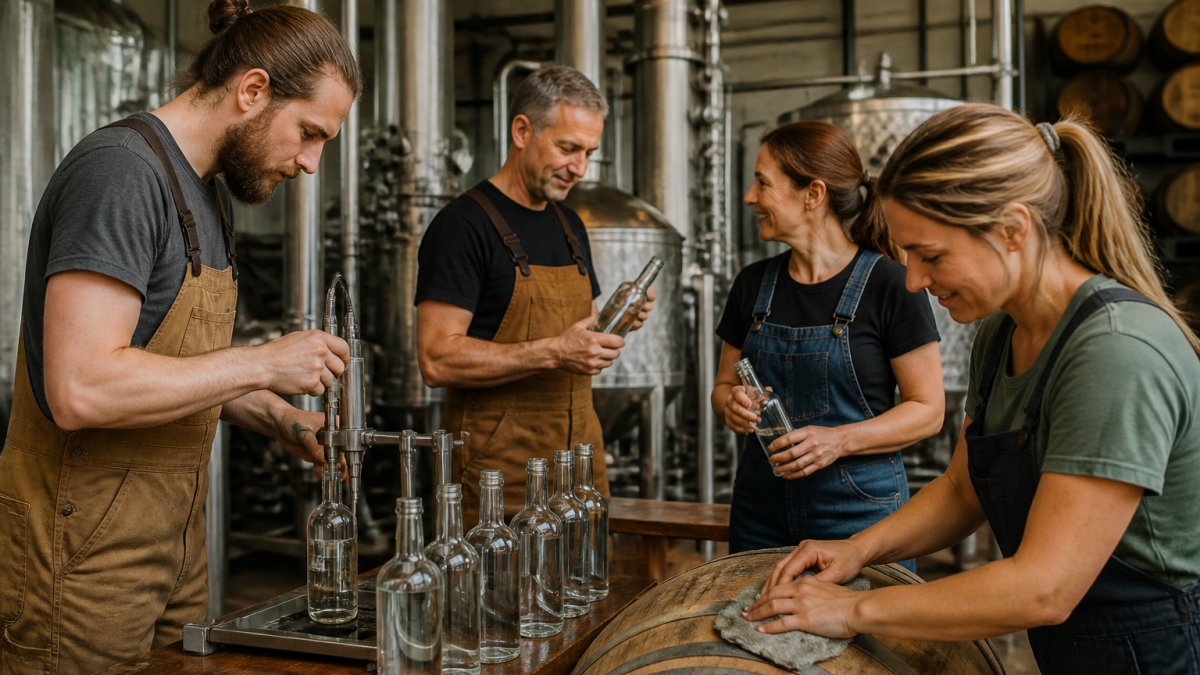
- Bottle by hand and catch inconsistencies a high-speed line would miss
A common mistake buyers make is assuming "small-batch" on a label means anything specific. It doesn't. What matters is whether the people making the decisions are the people who own the place.
This is also where the trade-off lives. Family distilleries usually can't match the consistency of a plant running the same recipe at massive scale. You're trading absolute uniformity for character and a shorter supply chain. Most enthusiasts consider that a fair trade.
How to Support Local Distilleries: Practical Steps That Actually Help
Supporting local distilleries takes more than an occasional bottle purchase. The highest-impact moves are buying direct, showing up to events, and telling other people about what you found. Direct sales keep more margin with the producer than wholesale or distribution does, and they give the distillery something a distributor never will: your name, your preferences, and a reason to keep making the spirit you liked.
Here's a practical checklist you can act on this month, with a note on why each step matters:
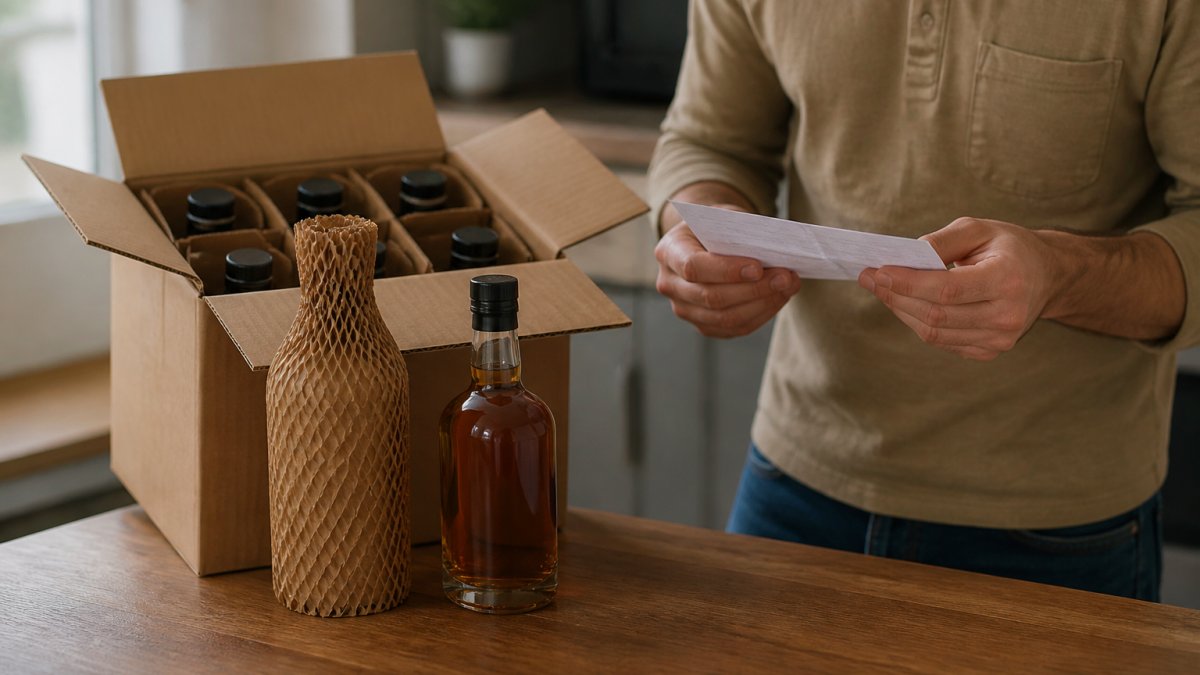
- Buy directly from the distillery's online store or tasting room when shipping or pickup is available. Direct-to-consumer sales typically return a larger share of the bottle price to the producer than a three-tier wholesale arrangement, where distributor and retailer margins take a cut before the distillery sees payment.
- Join a bottle club or membership program if the distillery offers one. Recurring memberships give a small producer predictable revenue, which is exactly what a family operation needs to plan barrel purchases and aging schedules a year or more out.
- Attend a tasting or release event rather than only buying at retail. Events convert curiosity into a relationship, and attendees often become the word-of-mouth base a small distillery cannot afford to buy through advertising.
- Ask questions about grain sourcing and aging, and note which producers answer clearly. A producer who can name the farm and the barrel entry date is giving you verifiable information; one who deflects is telling you something too.
- Leave a review or bring a friend, since word of mouth drives small-business discovery. Online reviews and personal recommendations are among the few marketing channels where a family distillery can compete with a national brand's budget.
- Buy a bottle as a gift instead of defaulting to a mass-market brand. Gift purchases introduce new customers at no acquisition cost to the distillery.
- Ask your local retailer to stock a specific bottle. Retailers track requests, and a steady stream of asks is one of the few signals that can get a small brand shelf space.
There's a responsible-purchasing side to this too. Supporting family distilleries does not mean overbuying or drinking more; it means choosing where your occasional purchase goes. A bottle bought thoughtfully from a producer you can name is a better use of the same budget than a case bought on price alone. If you don't drink, the same support can flow through tours, gifts, event attendance, and recommendations.
Finally, be realistic about availability. Family distilleries often cannot ship to every state, and some release schedules sell out before a national retailer would even list the product. Check the distillery's shipping page, ask about pickup options, and sign up for release notifications so you're not relying on a secondary market where the producer sees none of the markup.
Craft Distillery Tourism: What a Visit Really Adds
Craft distillery tourism turns a purchase into an education. A distillery tour shows you the still, the barrels, and the people, which is the fastest way to judge whether a producer is genuine.
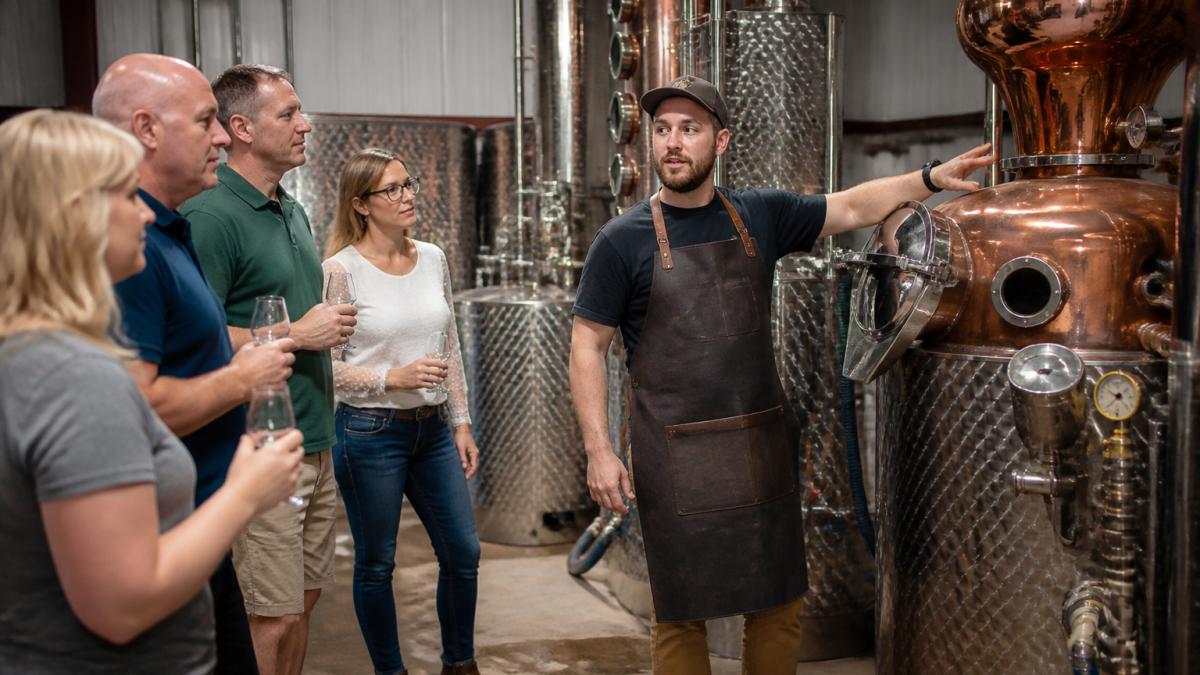
What does a visit actually add? Three things you can't get online. First, you taste before you commit. Second, you see production transparency in person, from the mash tun to the barrel room.
Tourism also matters economically. If you live an hour away and can't visit, order online and ask whether a virtual tasting or event appearance is coming to your area.
Local Distillery Events: Where Community and Craft Meet
Local distillery events do double duty: they build community and they teach product education.
The visitor experience at a good event is a conversation, not a sales pitch. You should leave knowing how the spirit was made, what to pair it with, and which bottle fits your taste.
What kinds of events are worth your time? A few common formats, and what each one actually gets you:
- Release parties: the first pour of a new batch, often with the distiller on hand to explain the recipe and aging choices. Best for buyers who want to taste before committing to a full bottle.
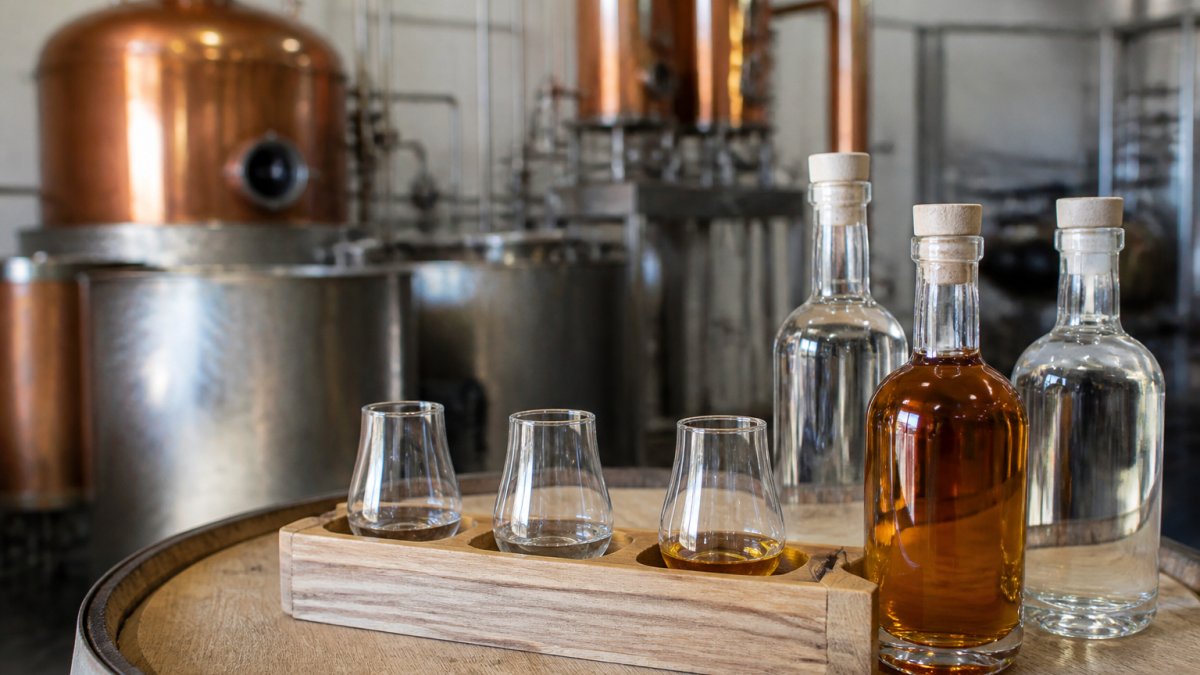
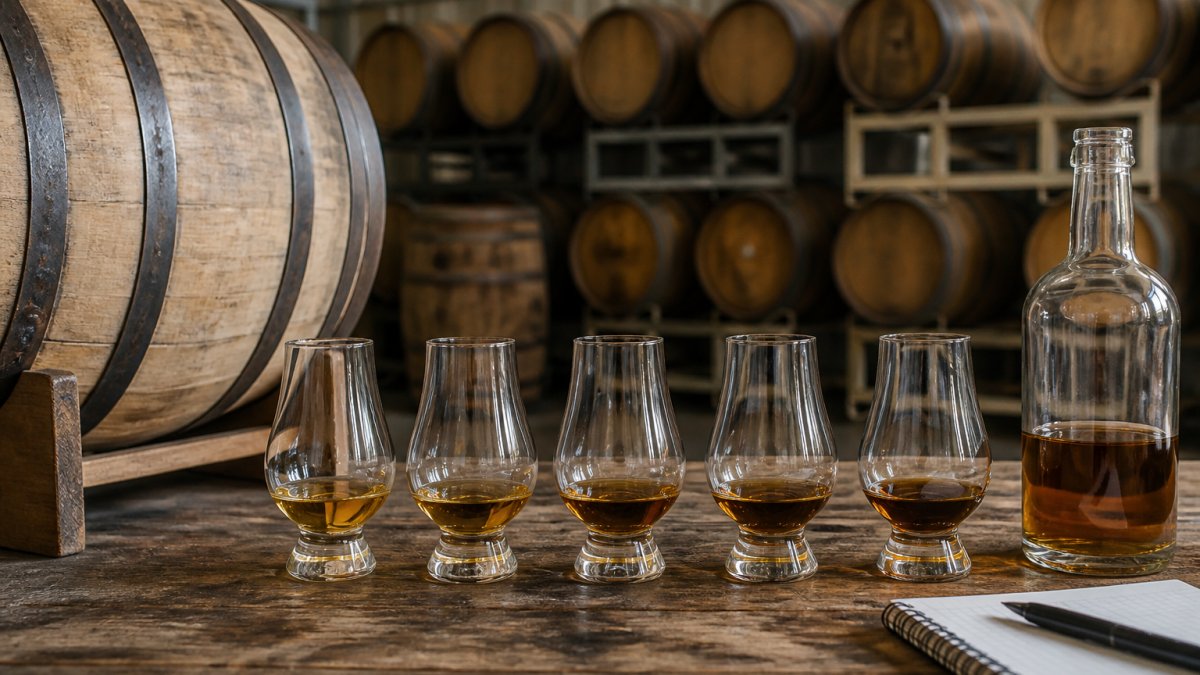
- Tasting nights and flights: a guided comparison of several expressions side by side. Best for learning how mash bill, barrel, and age change a spirit.
- Seasonal markets and pop-ups: a distillery sets up alongside local food vendors. Best for discovering a producer you hadn't heard of and buying a gift in the same trip.
- Educational sessions and classes: cocktail or spirits-education events led by staff. Best for turning a casual interest into a repeat purchase.
- Fundraisers and community benefits: the distillery donates time, product, or space to a local cause. Best for seeing how a business behaves when no sale is on the line.
Community engagement also shows up in less obvious ways. Family distilleries sponsor local causes, host fundraisers, and hire from the neighborhood.
A practical note on responsible attendance: events that involve tasting should include transportation planning, food, and water, and a designated driver or rideshare is the right call.
If you live an hour away and can't visit, ask whether a virtual tasting or a pop-up in your area is coming.
How to Tell a Genuinely Family Owned Distillery From a Rebrand
Most "family-owned" claims are true, but some are marketing. The way to tell is to ask who owns the business and who runs production, then check whether the answers match. A genuine family operation will tell you plainly, and the story will hold up under a few questions.
Use this quick test before you commit:
| What to check | Genuine family distillery | Rebrand or marketing story |
|---|---|---|
| Ownership | Named family, verifiable | Vague "our founders" language |
| Production | On-site still and barrel room | Contract or bulk sourcing |
| Tours | You can see the equipment | No facility access offered |
| Sourcing | Specific regional farms named | No sourcing details given |
| Staff | Owners present and reachable | Call center or no contact |
A common red flag is a producer who can't tell you where the grain comes from or how long the spirit aged. A second is a facility you're never allowed to see. Neither proves a problem on its own, but together they suggest the story is thinner than the label implies.
Conclusion
The benefits of supporting family owned distilleries come down to where your money goes and who stands behind the bottle. You get fresher, more distinctive spirits, a producer who answers for quality, and a local economy that keeps more of what you spend. The trade-off is real: less uniformity, sometimes higher prices, and a smaller selection than a national brand offers.
That's why we do this. At Lighthouse Spirits, we're family-owned and locally owned, we produce in small batches in Evans City, and we hold to precision, balance, and integrity in every run. You can order online for local pickup or shipping, or meet us at community events across Pennsylvania.
Frequently Asked Questions
What are the benefits of supporting a family-owned distillery?
You get spirits made in small batches where the people who distilled them also answer for how they taste. Family owned distilleries tend to keep tighter control over grain sourcing, aging, and bottling, so quality stays consistent from one release to the next. Your money also stays closer to home: it supports local jobs, regional agriculture, and tasting rooms that host community events. You also get direct access to the makers, which means real answers about production instead of a marketing script.
How does buying from a local distillery benefit the community?
A local distillery spends inside its own region. It buys grain from nearby farms, hires locally, rents space locally, and pays local taxes. Tasting rooms and local distillery events pull visitors into town, which supports restaurants and shops nearby. When you buy a bottle directly, more of that dollar stays in the community than when you buy the same category from a large national brand distributed through multiple layers of wholesale. Small-scale production also keeps regional agriculture in the supply chain.
How can I support a small distillery if I live far away?
Distance does not rule it out. Order online where shipping is offered, and check whether local pickup is available if you are ever nearby. Follow the distillery on social media, sign up for its newsletter, and buy gift bottles for people who live closer. If you cannot visit, ask about shipping rules to your state before ordering, since alcohol shipping rules vary. Leaving an honest review and telling friends about a bottle you liked costs nothing and helps a small producer far more than a large brand needs it.
Do family-owned distilleries make small-batch spirits?
Most do, because small-batch production is often a hallmark of family ownership. Ask the distillery directly how large its batches are and how long the spirit aged; a genuine small producer will tell you without hesitation.
If you want spirits made with patience and a name attached to them, start with a bottle you can trace. Browse the Lighthouse Spirits lineup, order online for pickup or shipping, and taste what disciplined small-batch production actually delivers.