 how-to
How to Identify Authentic Craft Spirits: 2026 Guide
Table of Contents
- Start With a Working Definition: What Is a Craft Spirit?
- The Bottle-Authentication Checklist for Craft Spirits
- How to Read a Spirits Label and Verify Production Claims
- Distilled By vs. Bottled By: What the Wording Actually Tells You
- Red Flags and Misleading Claims on Craft Spirits
- How to Taste Whiskey and Judge Whether the Liquid Matches the Label
- Questions to Ask a Distillery Before You Buy
- Frequently Asked Questions
Last Updated: October 21, 2026
Start With a Working Definition: What Is a Craft Spirit?
Here at Lighthouse Spirits, we've watched the word "craft" get stretched in every direction. So let's start with what holds up.
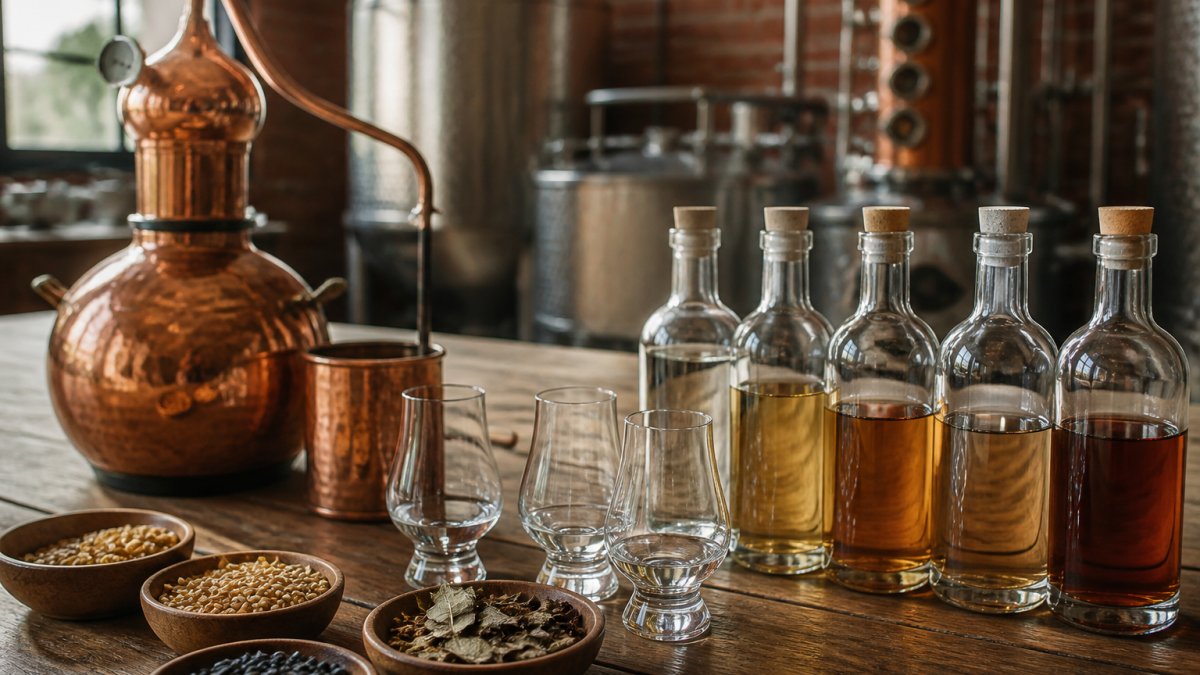
A genuine craft distillery usually shows:
- Small-batch production, not tanker loads of bulk spirit
- Hands-on distilling by the people whose name is on the bottle
- Real fermentation on site, not just re-distilling purchased alcohol
- Transparent sourcing for grains and botanicals
- A production scale you can actually picture
The Alcohol and Tobacco Tax and Trade Bureau distillery permit rules draw a legal line around who can distill and bottle.
That's the tension running through this whole guide: craft is a production claim, and you have to check it like one.
The Bottle-Authentication Checklist for Craft Spirits
Use this checklist before you pay for any bottle. It takes about two minutes in the store or thirty seconds online.
- Find the distillery address. A real street address beats a PO box every time.
- Check the "distilled by" line. It should name the distillery, not a separate bottler.
- Look for a batch number. Small-batch spirits often carry a batch or bottle number.
- Read the back label. Look for grain type, barrel type, and age statements.
- Search the distillery. A working website with a location and hours is a good sign.
- Check the proof and volume. These should be clear and specific.
- Ask who made it. If the staff can't tell you, that's your answer.
A common mistake is trusting the front label alone. The front sells. The back tells.
How to Read a Spirits Label and Verify Production Claims
The back label is where the truth lives. Front labels are designed to sell a feeling. Back labels carry the legal and production details you actually need.
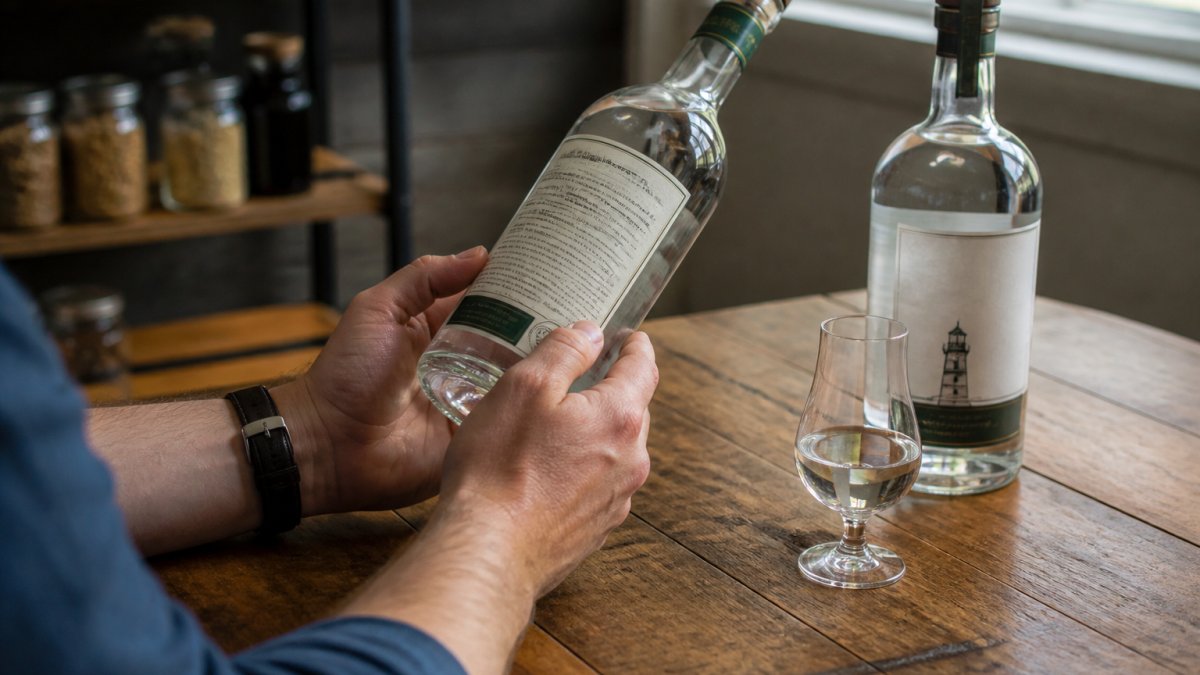
Start with the mandatory statements. Under federal labeling rules enforced by the Alcohol and Tobacco Tax and Trade Bureau labeling and advertising guidance for distilled spirits, every distilled spirits bottle sold in the U.S. must carry a brand name, class and type designation, alcohol content by volume, net contents, and the name and address of the bottler or importer.
Here is how to read each one and what it actually tells you:
- Class and type. This is the legal category. "Bourbon whiskey," "straight bourbon whiskey," "gin," "vodka," and "rum" each carry defined production requirements. "Straight" means the spirit was aged at least two years in new charred oak (for whiskey) with no added coloring or flavoring. If the label uses a class name loosely or invents one, treat the rest of the claims with caution.
- Age statement. An age statement is a regulated claim. If the label says "aged 4 years," that is the age of the youngest spirit in the bottle, not an average. If it says "aged" with no number, you have no enforceable age information.
- Alcohol content. Shown as "% Alc/Vol" or proof. Proof is twice the alcohol by volume in the U.S. system. A stated proof is a factual disclosure; a high proof is not a quality signal by itself.
- Neutral grain spirit. If this appears in the ingredients or class description, the producer is blending a neutral base with other spirits or flavorings. That is legal and common in flavored products, but it tells you the bottle is not a single distilled spirit.
- "Blended" language. "Blended whiskey," "blended straight whiskey," and similar terms describe combinations of spirits, sometimes from multiple sources. Blending is a legitimate craft technique, but it means the liquid is not from one distillation run.
- "Distilled by," "bottled by," "produced by." These are the sourcing disclosures. "Distilled by" names the company that ran the still. "Bottled by" names the company that filled the bottle, which may have purchased the spirit. "Produced by" is broader and can cover several arrangements. Read this line before you read anything on the front.
A practical verification sequence:
- Read the class and type. Does it match what the front label implies?
- Read the "distilled by" or "bottled by" line. Does it name a distillery or only a bottler?
- Look for an age statement. Is it a number, or just the word "aged"?
- Check for neutral grain spirit or blending language. Does the bottle disclose what it is?
- Search the named producer. Does a working distillery address and production description exist?
A common pattern is a front label that implies estate distilling while the back label says "bottled by" a separate company. The TTB distilled spirits labeling requirements distinguish mandatory statements from optional marketing claims, and knowing which is which is the whole skill.
Distilled By vs. Bottled By: What the Wording Actually Tells You
"Distilled by" means the named company made the spirit. "Bottled by" means the company only filled the bottle, and the liquid may have come from somewhere else.
Both are legal. Both can be good. But they are not the same claim.
- Distilled by: the company ran the still.
- Bottled by: the company bought spirit and packaged it.
- Blended by: the company combined spirits from multiple sources.
- Produced by: a looser term that can cover several arrangements.
Sourced spirits are everywhere in the industry, and some are excellent. The problem is when a sourced product is sold as if it came off a small pot still down the road.
If a bottle says "bottled by" and the marketing implies "distilled by," ask why.
Red Flags and Misleading Claims on Craft Spirits
Most "craft" language on a label is not legally defined. The TTB regulates class and type, age statements, alcohol content, and origin claims, but it does not enforce a single legal definition of "craft," "small-batch," or "handcrafted." That gap is where misleading claims live.
Watch for these warning signs, and understand what each one actually signals:
- No distillery address anywhere on the label. Federal rules require a bottler or importer name and address, so a complete absence is unusual and worth questioning. A PO box alone tells you little about where the spirit was made.
- Vague origin language. "Crafted in small batches" with no named producer, no location, and no batch information is marketing, not disclosure. Compare it to a label that names the distillery, the city, and the batch number.
- A farm or estate name that is only a brand. Some brands use pastoral names that suggest a working farm distillery. Check whether the named site actually distills or merely lends its name. A working distillery will usually describe its still, its grains, and its fermentation.
- "Handcrafted" with no supporting detail. Handcrafted is not a regulated term. Look for the specifics behind it: who distilled it, what equipment, what ingredients, how long it aged.
- Prices that do not match the story. A bottle priced like a limited estate release but labeled "bottled by" a bulk supplier is a mismatch worth noticing. Price is not proof either way, but a story that does not fit the price is a prompt to ask questions.
- No batch or lot information on a product claiming small-batch status. Batch numbers are not required, but a producer making genuine small batches usually has them. Their absence on a "small-batch" product is a soft signal, not a verdict.
- Sourced spirit presented as house-distilled. Sourcing is legal and widespread. The red flag is not sourcing itself but marketing that implies distillation the label does not support. Read the "distilled by" line against the front-label story.
- Unsupported local claims. "Local grains" and "estate botanicals" are meaningful only if the producer can name the farm or region. Ask which grains, from where, and in what proportion.
A useful rule: regulated statements (class and type, age, alcohol content, bottler name and address) are checkable. Unregulated adjectives (craft, small-batch, handcrafted, artisanal) are not.
None of these flags proves a spirit is bad. They tell you where to ask questions. A transparent producer will answer them; a vague one will change the subject.
How to Taste Whiskey and Judge Whether the Liquid Matches the Label
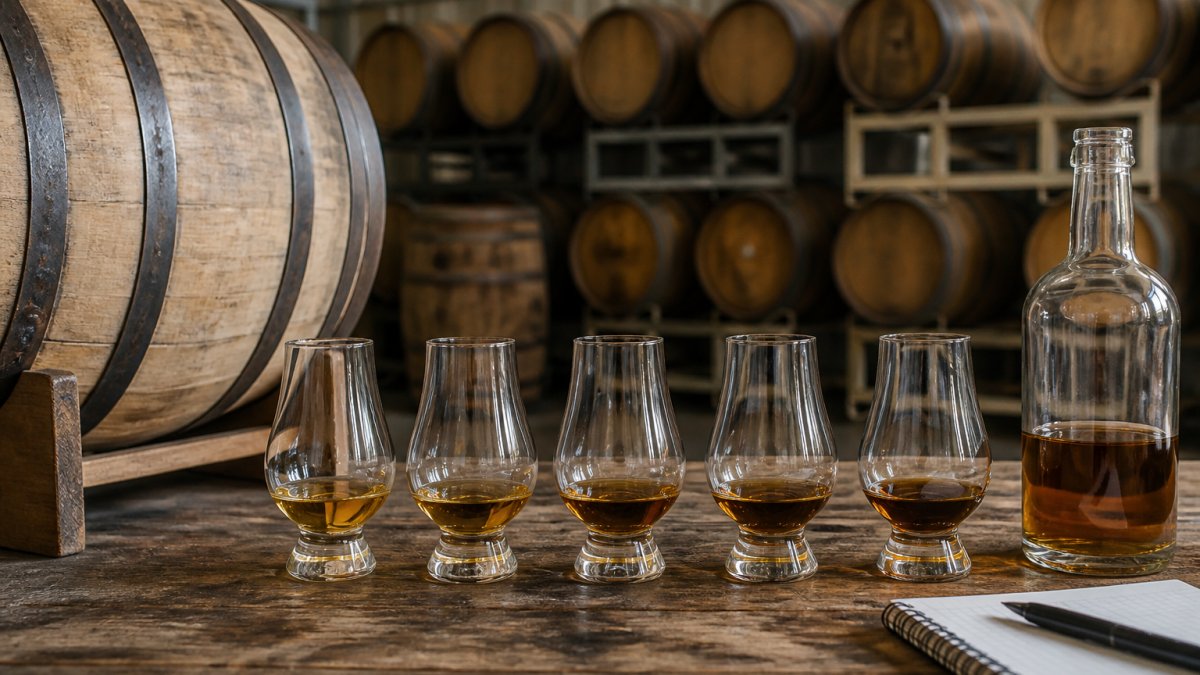
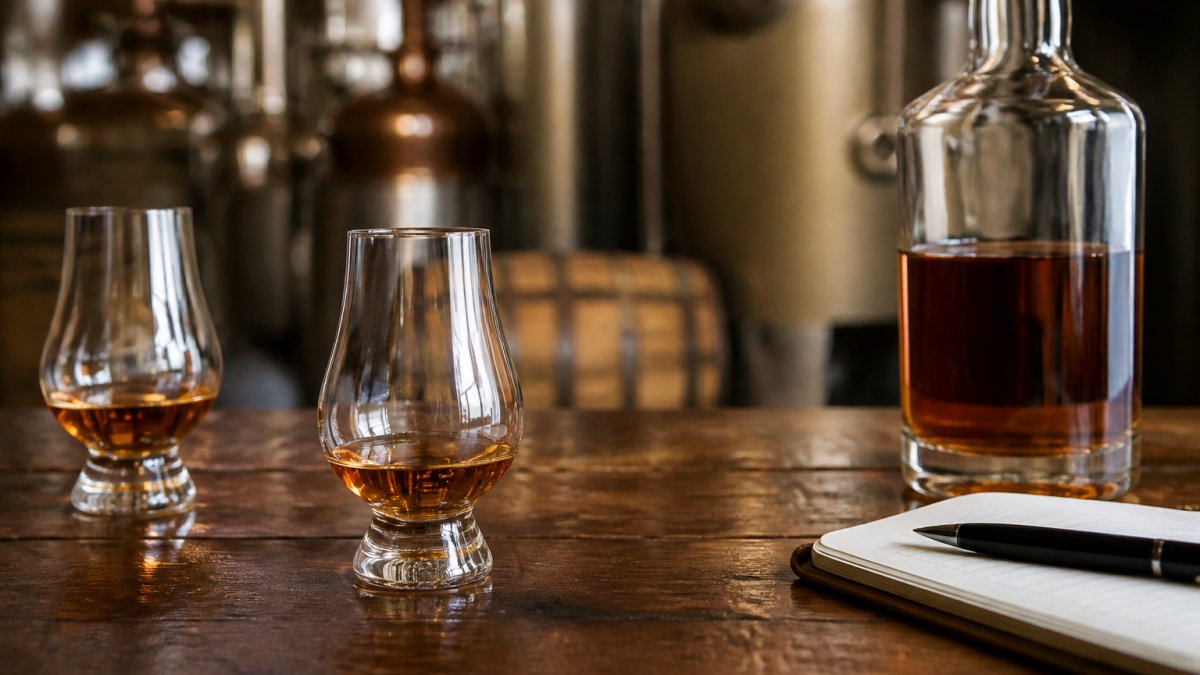
Tasting tells you whether the story on the label holds up in the glass. You don't need a lab coat. You need a clean glass and a little patience.
- Pour a small amount in a tulip or rocks glass.
- Look at the color. Barrel aging usually deepens it.
- Nose it gently. Look for grain, botanicals, citrus, cinnamon, or barrel notes.
- Sip slowly. Note the first impression, then the finish.
- Add a drop of water. This can open up the flavor profile.
- Compare to the label. Does the taste match the claims?
If a label promises barrel-aged character and the liquid tastes thin and raw, that's a mismatch worth noting.
Questions to Ask a Distillery Before You Buy
A good distillery welcomes these questions. The answers tell you more than any label.
- Where is this distilled?
- What grains or botanicals do you use, and where do they come from?
- How long was it aged, and in what kind of barrel?
- How large are your batches?
- Can I visit or attend a tasting?
At Lighthouse Spirits, we're a family-owned distillery in Evans City, and we're glad to walk anyone through our process. That's the standard we'd hold every producer to.
Figuring out what's real in a bottle takes a few good questions and a close read of the label. It's worth the effort, because the spirits that earn their claims tend to taste better too.
At Lighthouse Spirits, we make small-batch spirits with disciplined, patient processes, and we're happy to answer every question above. Our lineup includes American Light Whiskey and our Ube Moonshine, and you can order online for local pickup or shipping.
Frequently Asked Questions
What makes a spirit a craft spirit?
There is no federal legal definition of craft spirits, so the term describes production style rather than a protected category. In practice, it usually means a distillery that ferments and distills its own spirits in small batches, runs its own still, and makes hands-on decisions about grains, botanicals, and barrel aging. Because the word is unregulated, the label alone does not prove it. Check the distilled by statement, the batch size, and whether the distillery will explain its process in detail.
How can you tell where a spirit was actually distilled?
Look for the phrase distilled by followed by a distillery name and address. That is different from bottled by or distributed by, which can appear on a bottle whose contents were made somewhere else. If the label says sourced, blended, or produced in cooperation with, the liquid likely came from another facility. The most reliable check is asking the distillery directly which still produced the batch and whether you can visit or see the production floor.
Does a higher price mean a craft spirit is more authentic?
No. Price reflects barrel aging time, ingredient cost, batch size, packaging, and distribution markup, not authenticity. A $70 bottle can be sourced spirit in a heavy bottle, and a $35 bottle can come straight off a small pot still. Judge the liquid instead: read the label wording, ask about production, and taste before committing to a full bottle. Many distilleries offer tastings or small pours so you can decide before spending more.
How do I know a distillery is really family-owned and not rebranding bulk spirit?
Ask three questions: who distills the spirit, what still they use, and whether they will show you the production space. A family-owned distillery can usually name its grains, its still type, and its fermentation timeline without hesitation. Also check the label for a distilled by statement matching the brand, and look for batch numbers or proof details that change from release to release. Vague answers and identical labels across many SKUs are warning signs.