 how-to
How to Identify High Quality Whiskey: A Tasting Guide
Table of Contents
- Start With a Fair Tasting Setup
- How to Taste Whiskey: A Step-by-Step Method
- Whiskey Tasting Notes: What Balance and Complexity Look Like
- Proof, Alcohol by Volume, and Bottling Strength
- How to Read a Whiskey Label Without Being Fooled
- What a Whiskey Age Statement Really Means
- Common Flaws and Warning Signs in Whiskey
- Conclusion: Judging High Quality Whiskey on Your Own Terms
- Frequently Asked Questions
Last Updated: October 12, 2026
Start With a Fair Tasting Setup
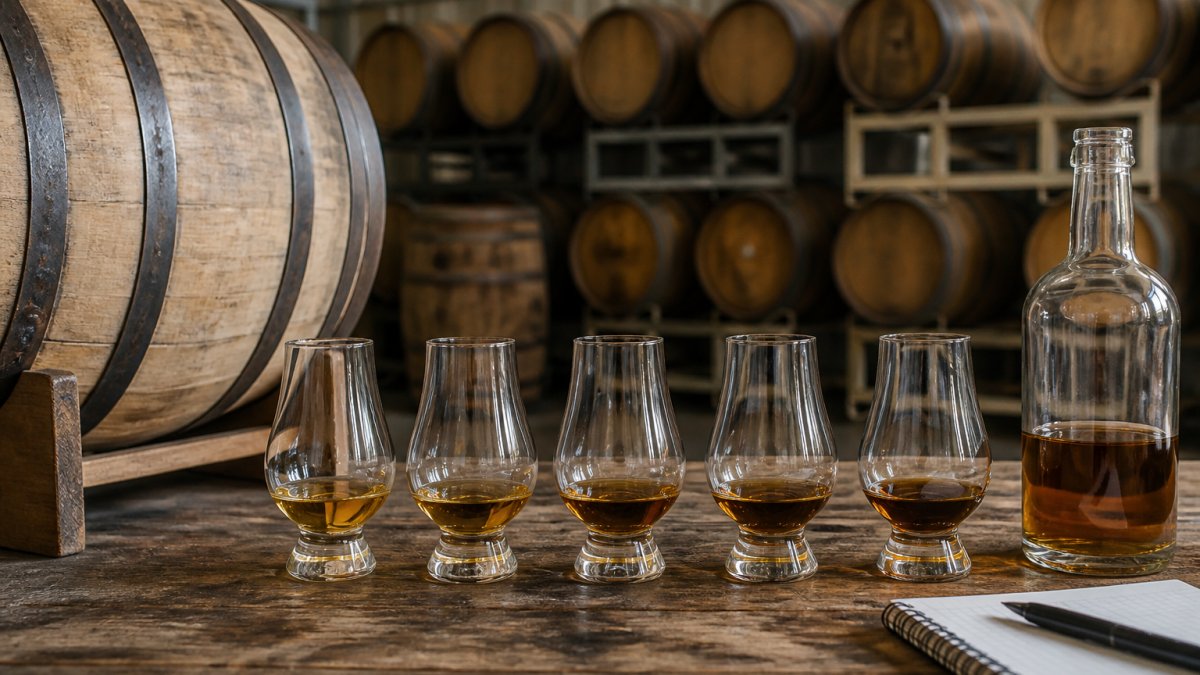
You cannot judge a whiskey fairly in a noisy bar or a crowded room. The environment shapes what you taste, and a bad setup will make a good pour seem flat.
High quality whiskey is a spirit that shows balance, clear flavor, and clean craftsmanship across the nose, palate, and finish. Quality is not the same as price, age, or proof. A bottle can be cheap and excellent. Another can be expensive and rough.
That distinction matters. Most guides treat quality as a checklist of luxury signals. Below, we'll show you exactly how to set up a fair tasting and what to look for.
Glassware, Water, and Time
The right gear makes a real difference. You need three things:
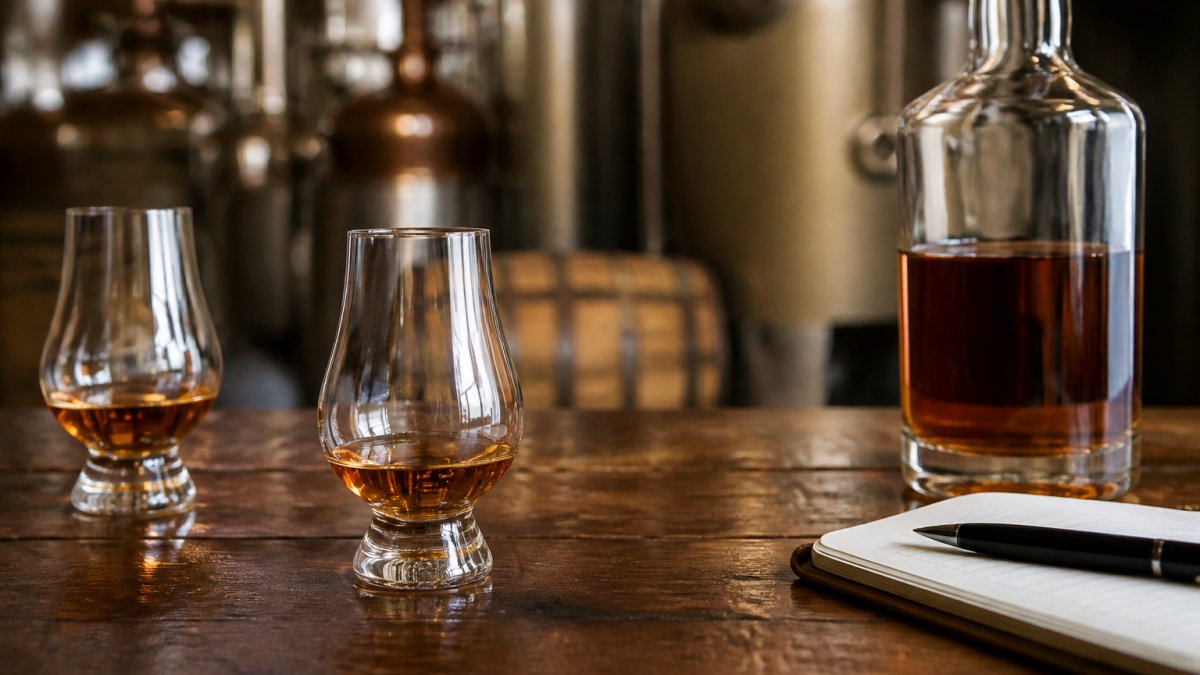
- A tulip-shaped glass, like a Glencairn, to focus aroma
- Room-temperature still water for a few drops
- 20 to 30 minutes with no strong smells nearby
Skip ice for evaluation. Cold hides flaws and mutes aroma. Neat is the standard for judging quality.
How to Taste Whiskey: A Step-by-Step Method
Tasting whiskey well is a skill you build, not a talent you're born with. The method below works for any style, from bourbon to single malt Scotch to Irish whiskey. Follow the steps in order and take notes as you go.
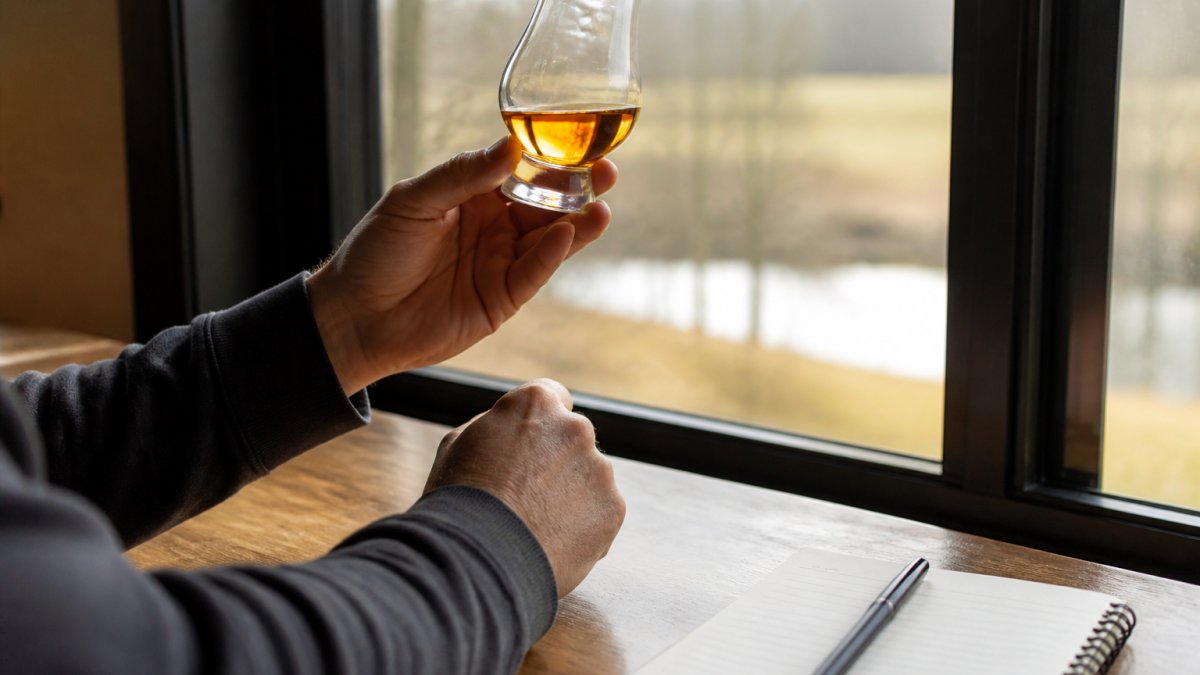
Here is how to walk through a pour:
- Let the glass rest for a minute after pouring
- Nose it gently, mouth slightly open, without inhaling hard
- Take a small sip and coat your whole tongue
- Add two or three drops of water and taste again
- Wait, then check the finish
The Nose, the Palate, and the Finish
The nose is the aroma you get before sipping. The palate is the taste and texture in your mouth. The finish is what lingers after you swallow.
A high quality whiskey shows something at each stage. The nose should be clean, not sharp with alcohol. The palate should feel balanced. The finish should last and stay pleasant.
If the alcohol burns and hides everything else, that's a warning sign. Good whiskey is smooth enough to let flavor through, even at higher proof.
Whiskey Tasting Notes: What Balance and Complexity Look Like
Whiskey tasting notes describe the specific flavors you pick up, like vanilla, caramel, spice, or fruit. They are a shared language for comparing pours. But notes alone don't tell you if a whiskey is good.
Balance is the real marker. No single note should shout over the others. Complexity means several flavors show up and shift as you sip. A simple whiskey can still be excellent if it's clean and balanced.
Watch for these signs of quality:
- Aroma, palate, and finish that agree with each other
- Flavors that develop rather than fade
- No harsh edge or chemical smell
Proof, Alcohol by Volume, and Bottling Strength
Proof is a measure of alcohol strength, and it's simply double the alcohol by volume (ABV). So 100 proof equals 50% ABV. Higher proof isn't automatically better.
Bottling strength is the ABV a whiskey is bottled at. Cask strength means it's bottled straight from the barrel, often higher proof, without added water. Cask strength can be great, but only if the spirit is balanced enough to handle it.
The common advice to chase the highest proof is misguided. High proof amplifies everything, including flaws. A rough spirit at high proof tastes rougher. A clean spirit at moderate proof often drinks better.
How to Read a Whiskey Label Without Being Fooled
Learning how to read a whiskey label helps you sort real information from marketing. Some terms are regulated by federal law. Others are not. Knowing the difference keeps you from paying for words that mean nothing.
The single most useful distinction is this: a label clue is only as strong as the rule behind it. A term with a legal definition is a fact. A term without one is a suggestion.
Terms With Legal Backing
These carry real weight because federal rules define them:
- Age statement: If a number of years appears, it reflects the youngest whiskey in the bottle. Under federal rules, an age statement is required on any whiskey aged less than four years, and the age shown must be the youngest spirit in the blend.
- Proof or ABV: Always shown and always reliable. Proof is simply double the alcohol by volume, so 90 proof equals 45% ABV.
- Style name: Bourbon, rye, Scotch, and Irish whiskey each carry legal production rules. Bourbon, for example, must be made from a mash bill of at least 51% corn, distilled to no more than 160 proof, entered into the barrel at no more than 125 proof, and aged in new charred oak.
- "Straight" whiskey: A regulated term meaning the whiskey was aged at least two years and has no added coloring or flavoring.
- Bottled-in-bond: A voluntary but tightly regulated designation requiring at least four years of aging, 100 proof, a single distillery, and a single distillation season.
Terms Without Legal Meaning
These sound impressive but have no fixed definition:
- "Small batch" and "craft": No legal standard. A large producer can use them freely.
- "Premium," "reserve," "rare," and "limited": Pure marketing. They describe nothing you can verify.
- "Handcrafted" or "artisanal": No enforceable meaning on a whiskey label.
What the Label Cannot Tell You
A label tells you the style, strength, and sometimes the age. It does not tell you how the whiskey tastes, whether the maker rushed fermentation, or how the spirit was cut with water before bottling. Those are the variables that separate a clean pour from a rough one, and none of them appear on the bottle.
The Alcohol and Tobacco Tax and Trade Bureau labeling rules set the standards for what can legally appear on a whiskey label in the United States. Those rules cover age, proof, and style claims. They do not cover flavor or quality.
So read the label for facts, then let your palate decide.
What a Whiskey Age Statement Really Means
A whiskey age statement tells you the youngest whiskey in the bottle. If a label says 12 years, every drop is at least 12 years old. It does not mean the whiskey is better than a younger one.
Age adds oak, vanilla, and caramel notes over time. But past a certain point, too much time in the barrel can make a whiskey taste woody or bitter. A well-made 6-year whiskey can beat a tired 15-year one.
Judging quality by age alone is one of the most common mistakes. Use age as one clue, not the verdict.
Common Flaws and Warning Signs in Whiskey
Flaws show up in specific ways once you know what to look for. The hard part is that some characteristics that read as flaws in one style are intentional in another. A heavy peat smoke in an Islay single malt is not a defect. A solvent-like sharpness in any whiskey is.
The key is to ask whether the trait is balanced by something else. A flaw usually stands alone and overwhelms the rest of the pour.
The Five Most Common Flaws
1. Solvent or chemical sharpness on the nose. This smells like nail polish remover or acetone.
2. A thin, watery mouthfeel. Good whiskey has texture, whether silky, oily, or creamy.
3. A bitter or harsh finish that lingers badly. Some bitterness is normal, especially from heavy oak.
4. Flavors that clash instead of blending. A whiskey can carry many notes and still be balanced. When the vanilla, spice, and fruit fight each other instead of layering, the blend or the barrel selection went wrong.
5. A burn that hides everything else. Alcohol heat is expected, especially at high proof.
How to Tell a Flaw From a Style Trait
A common pattern is to confuse intensity with defect. Here is how to separate them:
- Peat smoke in Scotch is intentional. A chemical or medicinal note that smells like bandages rather than smoke is not.
- High rye spice in a rye whiskey is expected. A raw, green, grassy harshness is not.
- Heavy oak in a long-aged bourbon is expected. A sawdust or wet-cardboard note is not.
- Corn sweetness in bourbon is expected. A syrupy, cloying sweetness with no structure is not.
The test is always the same: does the trait sit inside a balanced whole, or does it dominate and drown out everything else?
One Flaw vs. Many
A single flaw does not ruin a whiskey. A slight bitterness on the finish can be forgiven if the nose and palate are clean. But when two or more flaws appear together, the pour usually fails. A whiskey that is thin, harsh, and bitter is not a matter of taste. It is a matter of craftsmanship.
A clean, balanced pour will pass all five checks. If it fails two or more, you are tasting a problem, not a preference.
Conclusion: Judging High Quality Whiskey on Your Own Terms
The hardest part of judging whiskey is trusting your own palate over the label. Price, age, and proof are clues, not answers. The real test is what you taste.
At Lighthouse Spirits, we craft small-batch spirits with precision, balance, and integrity in Evans City, Pennsylvania. Every bottle is made with disciplined, patient processes, never rushed. Explore our American Light Whiskey and other offerings through secure online ordering for local pickup or shipping.
Frequently Asked Questions
How do you know if whiskey is good?
Good whiskey shows balance across aroma, palate, and finish, with no single element overpowering the others. Look for clean distillation, meaning no harsh chemical or solvent notes, and a finish that lingers without turning bitter. High quality whiskey also tastes complete rather than thin or unfinished. That said, quality is not the same as preference: a well-made whiskey you personally dislike is still well-made. Judge craftsmanship first, then decide whether the flavor profile suits you.
Does a higher price mean a whiskey is better?
Not necessarily. Price reflects scarcity, age, brand positioning, and distribution costs as much as it reflects quality. A high quality whiskey can be affordable, and an expensive bottle can still be poorly balanced. The useful move is to separate quality from price: assess aroma, palate, finish, and balance first, then decide whether the asking price feels fair for what is in the glass. Age statements and premium packaging are clues, not guarantees.
Does whiskey age make it better?
A whiskey age statement tells you the youngest spirit in the bottle, not whether the whiskey tastes better. Aging adds oak influence, including vanilla, caramel, and spice notes, but past a certain point it can also add too much tannin and wood. A 4-year whiskey stored in a good barrel can outperform a 12-year whiskey that sat in tired wood. Treat age as one data point among many, alongside proof, grain, and how the whiskey actually tastes.
How should beginners taste whiskey?
Start with a clean glass, ideally a tulip-shaped one, and pour a small amount at room temperature. Smell it first without swirling aggressively, then take a small sip and let it coat your mouth before swallowing. Note the aroma, the palate, and how long the finish lasts. If the proof feels hot, add a few drops of water and taste again to see what opens up. Comparing two whiskeys side by side teaches you more than tasting one alone.
Tasting high quality whiskey comes down to a fair setup, a repeatable method, and honest notes. Lighthouse Spirits makes that easy with family-owned, small-batch spirits built on balance and integrity. Order online and taste the difference for yourself.