 how-to
Where to Buy Premium Craft Spirits: 2026 Buying Guide
Table of Contents
- Where to Buy Premium Craft Spirits: Online Retailers, Distilleries, and Local Shops
- How to Buy Craft Spirits Online Without Getting Burned
- Craft Spirits Shipping Laws: What You Need to Know Before You Order
- Where to Buy Craft Whiskey: Distilleries, Retailers, and Online Options
- How to Choose Craft Whiskey Based on Taste, Occasion, and Experience
- Comparing Total Purchase Cost: Bottle Price, Shipping, and Hidden Fees
- Conclusion
- Frequently Asked Questions
Last Updated: October 10, 2026
Where to Buy Premium Craft Spirits: Online Retailers, Distilleries, and Local Shops
Finding where to buy premium craft spirits comes down to three channels: licensed online retailers, distillery direct sales, and local specialty shops. Each has trade-offs in selection, price, and convenience.
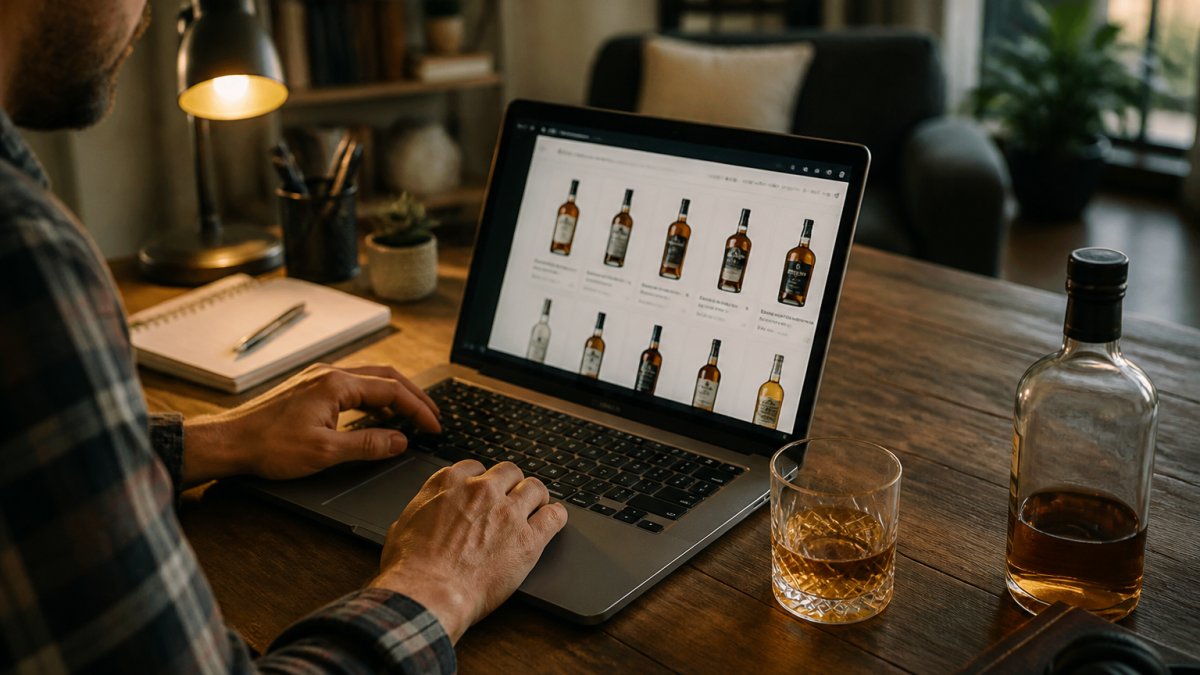
The craft spirits market has matured fast. Consumers who once settled for whatever sat on the shelf now seek out small-batch bottles from regional producers.
Below, we break down each channel, explain the legal landscape, and show you how to compare total cost before you commit.
Online Retailers and Marketplaces
Online retailers and marketplaces carry the widest selection of premium spirits, often spanning hundreds of producers across many states. The catch is that not every retailer ships to every state, and shipping fees can add meaningfully to the bottle price.
When buying craft spirits online, check three things before you order:
- Whether the retailer holds a valid license in your state
- Whether shipping is included or calculated at checkout
- Whether the retailer handles age verification at delivery
Marketplaces that aggregate multiple sellers can be convenient, but they vary widely in how they vet the producers they list. A dedicated retailer with a clear licensing statement is usually the safer bet for hard-to-find bottles.
Buying Direct from a Distillery
Buying direct from a distillery is the best way to guarantee provenance and often the only way to access limited releases. Many small producers sell through their own websites, offer local pickup, or ship within their home state.
Direct purchasing also supports the producer more fully. When you buy from a distillery's own store, a larger share of the sale goes to the people who actually made the spirit.
At Lighthouse Spirits, we sell our small-batch lineup through our own online store, with options for local pickup or shipping where permitted.
Local Liquor Stores and Specialty Shops
Local liquor stores and specialty shops remain the fastest way to buy premium craft spirits, and they let you inspect the bottle in person. Specialty shops often stock regional producers that national chains skip.
The trade-off is selection. A single store may carry only a handful of craft labels, and staff knowledge varies.
For anyone who wants a bottle today and prefers to see it first, the local shop still wins. For rare or limited bottles, the online and direct channels usually win.
How to Buy Craft Spirits Online Without Getting Burned
Buying craft spirits online safely comes down to two questions: is the seller legitimate, and is the bottle what it claims to be? Answer both before you pay, and most of the risk disappears.
Verifying the seller
A legitimate retailer or distillery will make its licensing easy to find. Here is what to look for and where:
- A license or permit number displayed on the site, usually in the footer, an "About" page, or a shipping page. You can cross-check a producer's federal permit through the TTB's permit records, and a retailer's state license through your state's alcohol control board.
- A physical business address that matches the licensed entity, not just a P.O. box or a virtual office.
- State-by-state shipping terms that name the states the seller can and cannot serve.
- Age verification at checkout, typically an adult signature requirement at delivery.
- Reviews and mentions outside the seller's own site, third-party forums, retailer directories, or press coverage.
A common pattern among problem sellers is a polished storefront with no verifiable license, no named producer behind the bottles, and no stated shipping restrictions. If any of those are missing, slow down.
Verifying provenance
Provenance means you can trace the bottle to the producer who made it. A bottle that claims to be from a specific distillery should name that distillery clearly on the label and on the product page. Vague language like "crafted in small batches" with no producer named is a red flag, especially for rare or allocated releases.
For high-value bottles, ask the seller for the batch or release information and, where relevant, the barrel or bottle number. Reputable sellers of allocated spirits will provide this without hesitation.
Understanding marketplace protections
Marketplaces that aggregate multiple sellers vary widely in how they vet producers and how they handle disputes. Before buying through one, check:
- Whether the marketplace holds the license or the individual seller does.
- What the return and refund policy covers, damaged bottles, wrong bottles, and undelivered orders.
- Whether the marketplace mediates disputes or pushes you back to the seller.
A dedicated retailer with a clear licensing statement and a published return policy is usually the safer bet for hard-to-find bottles.
Returns, damaged deliveries, and age verification
Plan for what happens if something goes wrong:
- Damaged in transit: Most legitimate sellers require you to report damage within a short window, often 24 to 72 hours, with photos of the packaging and bottle. Check the policy before ordering.
- Seized or undeliverable shipments: If a shipment is stopped because the seller was not licensed for your state, recourse depends entirely on the seller's policy. An unlicensed seller has no process to make it right.
- Failed age verification: If no one 21 or older is present to sign, the carrier typically returns the package, and return shipping may be deducted from your refund.
Craft Spirits Shipping Laws: What You Need to Know Before You Order
Craft spirits shipping is regulated state by state, not by a single federal rule. That is why the same bottle can legally ship to one address and be blocked from another.
The framework to know is the three-tier system. Since the end of Prohibition, alcohol has generally moved from producer to wholesaler to retailer before reaching a consumer. Direct-to-consumer shipping is a set of exceptions carved out of that system, and each state defines its own exceptions differently. Most states fall into one of four buckets:
- Open direct shipping: Licensed retailers and/or distilleries may ship to residents, often with limits on volume per year.
- Distillery-only shipping: In-state producers may ship to in-state residents, but out-of-state retailers cannot.
- Reciprocal or permit states: Out-of-state sellers may ship only if they register, pay fees, and report sales to the state.
- Restricted or prohibited: Direct shipping is banned or limited to a narrow set of products, such as wine only.
A few practical consequences follow from this patchwork:
- A retailer licensed in one state is not automatically allowed to ship into yours. The retailer must hold a permit or registration in your state, or operate under a reciprocity agreement.
- Distillery-direct shipping is usually the most restricted channel. Many small producers can only ship within their home state or sell for local pickup.
- Volume caps are common. Some states limit how much a single household can receive per year, and sellers are expected to track it.
- Age verification is mandatory in every state that permits shipping. Expect an adult signature requirement at delivery, and expect carriers to refuse delivery if no one 21 or older is present.
Before you order, confirm two things:
- Whether the seller is licensed or registered to ship into your state.
- Whether your state requires an adult signature and what identification the carrier will accept.
Most legitimate sellers handle this for you by blocking orders to states they cannot serve, and by stating shipping restrictions on a dedicated page.
For current rules, the authoritative source is your state's alcohol control board or ABC (Alcoholic Beverage Control) agency. These agencies publish the list of what can ship, from whom, and under what limits.
State alcohol control board directory
Where to Buy Craft Whiskey: Distilleries, Retailers, and Online Options
Where to buy craft whiskey depends on whether you want a specific bottle, a specific producer, or simply the best value. Each channel serves a different goal.
| Channel | Best For | Selection | Shipping | Price Tendency |
|---|---|---|---|---|
| Online retailer | Hard-to-find bottles | Widest | State-dependent | Higher after fees |
| Distillery direct | Limited releases, provenance | Narrow but deep | Often in-state only | Fair, supports maker |
| Local specialty shop | Buying today, browsing | Limited | None needed | Varies |
If you already know the producer you want, buy direct. If you are hunting a bottle no local shop carries, an online retailer is your best shot. If you want to compare bottles side by side, a specialty shop is hard to beat.
How to Choose Craft Whiskey Based on Taste, Occasion, and Experience
Choosing craft whiskey gets easier when you match the bottle to three things: your taste, the occasion, and your experience level.
- Taste: Grain and barrel drive flavor. Corn-forward whiskeys tend toward sweetness; rye adds spice; malt brings depth.
- Occasion: A casual gathering calls for something easy-drinking; a milestone calls for a bottle worth pausing over.
- Experience: New drinkers do well with smoother, lower-proof pours; seasoned drinkers often prefer higher-proof releases.
If you are not a whiskey drinker at all, do not assume a distillery only makes whiskey. Producers often run several categories, from whiskey to rum to liqueurs, so it pays to browse the full product range rather than fixate on one style.
Comparing Total Purchase Cost: Bottle Price, Shipping, and Hidden Fees
The real cost of premium spirits is the bottle price plus shipping plus any fees added at checkout. Comparing only the sticker price hides the difference between channels.
Watch for these cost layers:
- Shipping, which can rival the bottle price on single-bottle orders
- Adult signature fees, charged by some carriers
- State excise taxes applied at delivery
- Minimum order rules that push you to buy more than you planned
A bottle that looks cheaper online can cost more than a local purchase once shipping and fees land.
At Lighthouse Spirits, we keep our lineup and current pricing on our website so you can compare before you commit, and we offer local pickup for anyone who would rather skip shipping entirely.
Conclusion
Buying premium craft spirits well comes down to matching the channel to your goal and reading the fine print before you pay. The bottle is only half the purchase; shipping, licensing, and fees decide whether the deal was actually good.
Lighthouse Spirits is a family-owned distillery in Evans City, Pennsylvania, producing small-batch spirits with disciplined, patient processes.
Order online with Lighthouse Spirits and get a bottle made to be shared and remembered.
Frequently Asked Questions
Can you buy craft spirits directly from a distillery?
Yes, many craft distilleries sell directly to consumers, either at their tasting room or through online ordering with shipping. However, direct-to-consumer shipping is only legal in certain states and requires age verification at delivery. For example, Lighthouse Spirits offers secure online ordering for local pickup or shipping where permitted. Always check your state's laws before ordering, as some states restrict or prohibit direct shipments from distilleries.
How can you tell whether a craft spirit is genuinely small-batch?
Look for transparency about production methods. Visit the distillery's website or social media to see if they show their production process. If a brand cannot explain how their spirit is made or where it comes from, that is a red flag. Authentic craft producers are proud to discuss their methods.
What should you check before ordering spirits online?
First, confirm the retailer is licensed and can legally ship to your state. Check shipping restrictions and fees, as these vary widely. Verify the retailer's age verification process and return policy for damaged bottles. Read reviews. Also compare total cost, including shipping, against local store prices. Finally, ensure the website uses secure checkout and has clear contact information in case of issues.
Can craft spirits be shipped to your state?
It depends on your state's laws. As of 2026, many states allow direct-to-consumer shipping from distilleries and online retailers, but some require permits or limit the quantity per year. Before ordering, check your state's alcohol control board website for current rules. If shipping is not allowed, you may need to purchase from a local retailer or arrange a pickup at the distillery.